24 January 2026
Today, an unusual visit will take place. I will visit Pablo Hasel, who is imprisoned in a remote corner of Barcelona.
To visit him, we need to drive for over an hour.
During the car journey, I focus on the visit, going over what I will say to Pablo Hasel in my mind. At the same time, a thousand thoughts inevitably cross my mind. My own imprisonment comes to mind. I was subjected to very strict isolation. In the first few months, I was not allowed any visitors.
However, after filing case after case, visitors were allowed a few months later. That’s why I know very well how important visitors are to a prisoner.
I may not remember many of the people I met. But I never forgot those who came to visit me in prison. Neither the visits themselves, nor what we talked about during them. Even years later, they remain fresh in my memory. Of course, I won’t name each visitor individually, but since she passed away years ago, I see no harm in mentioning her here: Our dear, loyal friend, Paola Cecci, who never left us alone, came to visit me. We spoke through the glass. Her face, her smile, her tone of voice, the sparkle in her eyes, her English pushed to the limit as she tried desperately to tell me what was happening outside… all those visits are etched in my mind and heart.
Visits are very important. And imprisonment is a serious injustice.
We arrive at the prison, the visit takes place.
I had met Pablo Hasel once, years ago. He was in his early twenties at the time. He didn’t remember our encounter from years ago. Pablo hasn’t changed much.
In front of me is a political prisoner, just as I expected. He is curious about and follows what is happening in the world.
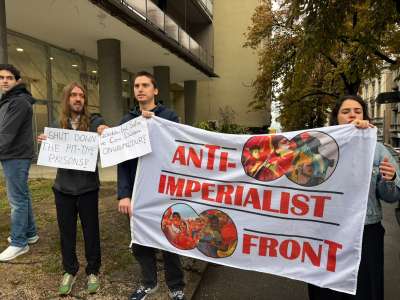
Pablo Hasel attended a conference organised by the Anti-Imperialist Front in Paris, probably in 2016.
During that period, he met engineers, lawyers, architects, lawyers etc. from the People’s Movement.
He witnessed their very impressive work. Because of this, he asked about the architects, engineers, lawyers and the HFG center for the fight against drugs and addiction.
Being an artist, he was naturally curious about developments in the Art Front. He asked about Grup Yorum.
I told him that Grup Yorum had released a new album two weeks ago.
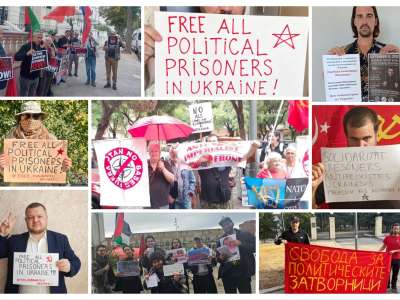
He wanted to know about the situation of the “free prisoners” in Turkey and Europe.
He was curious about the general situation in Turkey. He asked whether the people supported the government or not.
Pablo asked, ‘Okay, maybe the revolution won’t happen immediately; it may take more time. But do you think an uprising could happen soon?’
After talking with him for about half an hour about developments in Turkey and the prisoners, before our 45 minutes were up,
I wanted to find out about him.
I wondered how he was and what he was doing.
He is productive in prison.
He has written songs and will release an album with them after his release.
He has written poems. He is currently writing a novel.
He has health problems. The hygiene conditions in the prison where he was previously held were very poor. There were cockroaches everywhere. Sometimes they even came out of his food. He contracted an intestinal disease. Because it was not treated at the time, it became chronic.
At first, he had very severe pain.
Among the reasons why he could not be treated in time was that, at the hospital he was taken to, patient-doctor confidentiality was not observed, and soldiers behaved in a humiliating manner towards him, so he refused to be examined three times.
In the end, they had to accept Pablo’s demands, but his sickness had already become chronic.
There is no one in prison with whom he can socialise or converse.
There is another political prisoner in the prison where he is currently held who is an anarchist. However, because he wants to be released as soon as possible, he is cooperating with the administration. He has also joined the other prisoners with whom he is forced to share the exercise yard. The problem is not so much that they are murderers, but that even when he tries to talk to them, there is no connection.
Pablo asked me to send him resources to analyse the situation and the struggle in Turkey.
He asked which website he could follow to learn about free prisoners and the revolutionary struggle.
I gave him information about Zehra Kurtay and her struggle.
Pablo was curious about Aytaç Ünsal. They had met in Paris, and he said he had many fond memories of Aytaç. He sent him lots of greetings.
Forty-five minutes passed very quickly. The bell rang, and the visit was over.
After leaving the prison, it was very difficult for me to leave Pablo behind, knowing that he would return to his cell and be alone. A deep sadness filled my heart.
But we will meet again. In a song, a poem, a letter. For example, he and Fikret Akar will start a pen-pal friendship.
We will definitely meet outside one day.
As the meeting took place behind glass, I couldn’t hug him. The day will surely come when I can hug him when he will be released.
Even if we never meet again, I will follow his songs, his news, his struggle.
Şükriye Akar
Subscribe to stay up-to-date