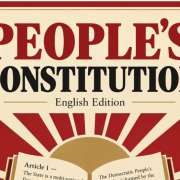
Within the framework of the expanded Greater Middle East Project (BOP), the entire Middle East was turned into a bloodbath. A key part of this is Syria, the last resisting region of the Arab Spring.
The imperialist policies in Syria initially focused on Islamist collaborators and were shaped through “train and equip” programmes. However, over time, Kurdish nationalists were also given a role. In line with this role, the PYD–YPG, which had established a certain degree of regional control, was made into a ground force.
What did the Kurdish nationalist movement receive in return?
Funding, logistics, political protection, and salaries paid in dollars to their personnel…
And what did the Kurdish nationalists give in return for the funding, logistics, and salaries?
Their political and organisational independence and the democratic national demands of the Kurdish people.
Rapid developments occurred in Syria due to the Arab Spring, and the “Rojava revolution” emerged almost as a fait accompli. In the so-called coalition against ISIS and other Islamists, all imperialists participated, along with Arab reactionaries and Israeli Zionism.
The Kurdish nationalists were assigned the role of the coalition’s ground force. In return, under the so-called “Train and Equip” programme, formally called the Counter-Terrorism Engagement Fund (CTEF), they received logistical support, military training, and what amounted to a meagre, nominally condemned salary.
The “coalition” created such a mesmerizing effect that the Kurdish nationalist movement became intoxicated with the illusion that they were strategic partners of the imperialists. This delusion fostered an unparalleled political naivety and unlimited arrogance. Their self-perception as partners of imperialism became so extreme that they openly demanded, for example, that “the Turkish state should be expelled from NATO” and that “Turkey should be removed from the EU accession process.”
Claims that the SDG, which replaced the PYD, was established under the direction of U.S. General Raymond Thomas have been confirmed, primarily because R. Thomas acted as the spokesperson during the budget deliberations in the U.S. Senate.
The relationships of U.S. imperialists with the SDG–YPG began to be managed by U.S. military intelligence officers in Syria and Iraq, and they have continued in this manner ever since.
An anecdote from a U.S. Senate budget meeting clearly illustrates the situation:
During the 2019 budget discussions, U.S. senators asked the U.S. military intelligence officer in Syria, “What are the chances of YPG fighters against the Turkish army preparing for an operation in northern Syria?” Colonel Caggins responded: “If we withdraw from behind them, their chances are zero… Unable to withstand Turkish pressure, they might be forced to leave the safe zone, which President Trump has approved. In that case, our plan is to shift the YPG further south with minimal losses.”
The rationale for moving the YPG south was that “President Trump had approved a plan in which the safe zone, prepared by the Pentagon, could be left to Turkey for other strategic calculations,” clearly showing whose will controlled the SDG–YPG.
Thus, in November 2019, YPG forces in northern Syria were moved to the oil region, where they were allowed a share of the oil they guarded. Meanwhile, to avoid upsetting their local collaborators—the Turkish oligarchy—they decided not to involve the YPG in Senate budget hearings, opting instead to manage relations via the Pentagon, where global massacres are orchestrated and covert operations planned.
Even this anecdote alone proves the SDG–YPG’s role as a cursed bargaining instrument.
HOW SDG–YPG SALARIES ARE PAID
Budgets began at $500 million in 2018 and $300 million in 2019 and, although decreasing over the years, have continued. Over the past five years, including additional payments, a total of $2 billion has been allocated. For 2026, a budget of $130 million has been set, half of which is for salaries for YPG members.
Those preparing the budget state that half of these salaries go directly to the organisation. In this way, while the organisation receives a large sum, the political independence of the command structures is fully controlled.
The budget passed by the U.S. Senate makes the YPG almost entirely financially dependent, tying their political and operational autonomy to imperialist supervision.
Apart from this, the annual budget of $200 million from Gulf countries is also used for the same purposes.
HOW MANY PEOPLE RECEIVE THESE SALARIES?
In 2019, we are talking about an army of 38,000, of which 15,000 were highly trained. In the following years, especially under Brett McGurk’s leadership, this number was inflated to appear as 80,000–90,000, with additional payments increased accordingly. McGurk and his team transferred huge sums to their own accounts through these “virtual soldiers,” while the Kurdish nationalists also benefited in various ways.
Thus, corruption was not limited to bargaining away the democratic demands of the Kurdish people; it extended internally to the organisation itself.
Another dimension of corruption involves additional payments beyond salaries. These “bonus” payments are linked to performance. For instance, capturing oil regions or achieving a victory in Raqqa, at the cost of around 10,000 martyrs, was considered performance worthy of reward.
So, what is really being traded in these salaries and funded bonuses? Undoubtedly, the honour, hope, and blood of the Kurdish people. Cooperation with imperialism brings dependency, decay, and moral rot.
Since these payments cannot be publicly disclosed, they are made using cash methods for secret operations, leaving them open to all forms of corruption and abuse. And if this cash flow becomes constrained? When these payments become a livelihood, what ideals, hierarchy, or hope can they inspire loyalty towards? Loyalty will be to whom: the organisation’s leadership or the one who provides the money?
HAS THE KURDISH NATIONALIST MOVEMENT CORRUPTED, BUT NOT ITS FOLLOWERS?
One of the shortest definitions of opportunism is “saying one thing and doing another.” In the debate over whether Rojava is a revolution or not, this can be extended as “what is seen differs from what is desired.”
There is no innocent longing in what they wish to see. Those who proclaimed “Rojava is a revolution” were well aware that no real revolution existed; the rhetoric was mere demagogy.
Today, the debate over whether Rojava constitutes a revolution has become clear in practice, undeniable by anyone. Those who tried to manufacture a “revolutionary perception” have painfully faced the reality that facts cannot be erased by intent.
The “revolutionary perception” of Rojava was the most commonly used tool by the Kurdish nationalist movement and its opportunist leftist followers to block all political discussion and polemics. It was used to cover up the surrenderist, right-wing policies of the Kurdish nationalists and to smooth the path toward integration into the system.
The flattery of U.S. imperialism, Arab reactionaries, and Israeli Zionism by Kurdish nationalists and their opportunist followers was also masked by the Rojava narrative. However, Marxist–Leninist theory is clear: a movement either carries the anti-imperialist, popular, revolutionary character of an oppressed nation, or it remains bourgeois, confined within national borders, showing a tendency to compromise with the imperialist system. Given their class origins, both the Kurdish nationalists and the opportunist left knew this truth. They deliberately pursued this policy, consciously bringing surrenderist politics into the ranks of the people.
A clear fact remains: the opportunist groups in our country—especially those claiming to be MLKP or “Ibrahimists”—have never shown consistent presence in the class struggle. Avoiding the costs of struggle, these small sects have sought to profit from the Rojava project, despite their limited capacity.
After fifty years of so-called existence alongside their predecessors, the current state of these groups is pitiful. Throughout this period, while the people of Anatolia paid daily martyrdoms and faced fascist massacres, opportunism never took up arms at the crucial moment. Yet, through Rojava, they claimed to be building command structures and fulfilling their “internationalist” duties. Accepting the training of American agents in regions under U.S. protection while abstaining from armed struggle in their own country already exposes the state of opportunism.
The collaboration of Kurdish nationalists with U.S. imperialism, Arab reactionaries, and Israeli interests in their attacks against the revolutionary movement, and the presence of their opportunist supporters alongside them in Rojava, surpasses corruption—it is outright moral decay. Opportunism in our country has always functioned this way: fleeing when the price of struggle must be paid, yet first in exploiting revolutionary values when advantageous.
“HE WHO PAYS THE PIPER CALLS THE TUNE – THE KURDISH PEOPLE PAY THE PRICE.”
The money comes from imperialism. Acting as if imperialism does not exist does not erase its reality. Comparing imperialism to the local oligarchy and invoking the demagogy of “authoritarian vs. democratic” cannot legitimise cooperation with imperialism.
Attempting to justify the natural costs of national struggle with such primitive feudal rhetoric tramples on the national honour of the Kurdish people, who bear the real price.
During Turkey’s collaboration with imperialism and NATO membership, during the Korean war, the U.S. referring to Turkish soldiers as “70-cent soldiers” was a direct insult to the people of Anatolia. This statement also symbolised the process of re-colonisation. The Kurdish nationalists’ salaries of $100–150 per month, or $400–800 depending on rank, were in essence no different from the oligarchy’s collaborative dishonour.
Those who thought the “democratic husband” would side with the “authoritarian husband” in the struggle have been slapped hard by reality, stripped of their political and ideological independence. Imperialism used the Kurdish people in Syria under the rhetoric of the “Rojava Revolution” to alter regional balances to its advantage.
Given that imperialism’s re-entrenchment in the Middle East, through Syria, to secure its geopolitical interests and that the local oligarchy was the key collaborator in the BOP framework, anyone expecting imperialism to spare the oligarchy was bound to suffer a major defeat.
THE MONEY TALKS and THE TUNE IS SYRIA’S OIL REGIONS
The U.S. used the YPG to seize Deir ez-Zor and Raqqa and consolidate control over Syrian oil. The Kurdish people paid a heavy price, with around 10,000 martyrs in this oil war.
THE MONEY TALKS, THIS TIME THE TUNE IS AFRIN
Kurdish nationalism failed to see that the Turkish oligarchy’s attack on Afrin was inseparable from imperialist policy. While preparing the Kurdish people for resistance, imperialism told the so-called Rojava revolution, “Step aside a little,” and part of the revolution was abandoned without resistance.
How did this happen? At the same time the YPG–SDG claimed it would defend Afrin with all its forces; the U.S. Senate was finalising a budget for Syria and Rojava, including $225 million for Rojava. Faced with the threat that fighters in the oil regions might be redirected to Afrin, the U.S. essentially said, “We will not interfere with those going to Afrin” and left Afrin to the oligarchy in exchange for the budget allocation.
THE MONEY TALKS, THE TUNE IS PLAYED IN THE SAFE ZONES ALONG THE BORDERS
The oligarchy is an enemy of all the people of Anatolia—but even more so of the Kurdish people. That is why it sought to suppress the so-called “Kurdish Revolution” right on its doorstep.
The oligarchy instructed the U.S.: “Tell them to move thirty kilometres away from the border.” And so, the “Rojava Revolution” abandoned the border regions—the very heart of the revolutionary territory.
Once again, the tune was against the Kurdish people. Imperialism could never afford to discard its most loyal collaborator, the Turkish oligarchy.
THE MONEY TALKS, THE TUNE FAVOURS COLANİ
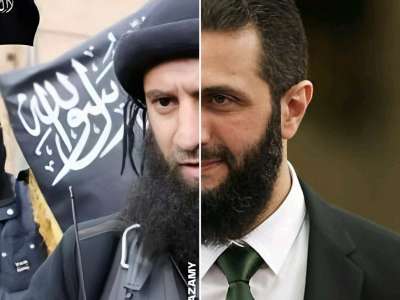
The oligarchy and imperialism toppled the BAAS regime in Syria and replaced it with Islamists whom they could manipulate more effectively. Imperialism once again used the Kurdish people as a lever for regional geopolitical shifts, replacing the banner of the “Rojava Revolution” with that of the Islamists. Cooperation with Colani was made a condition. The YPG-SDG, bringing fresh shame upon the Kurdish people, accepted this imperialist policy.
Once again, the tune was against the Kurdish people, because imperialism’s new target was Iran, and both the Kurdish people and the Islamists were needed to carry out attacks against Iran.
‘ROJAVA’ IS THE MORTGAGING OF THE KURDISH PEOPLE’S NATIONAL DEMANDS
From the outset, Rojava was a project financed, supplied, and trained by imperialism. Due to their class orientation, Kurdish nationalism once again accepted the role of collaborator in imperialist policies. Repeatedly in practice, the revolutionary principle that “the liberation of an oppressed nation cannot be separated from the struggle against imperialism” was ignored, and reliance was placed on collaboration.
WAS ROJAVA A REVOLUTION?
Imperialism would supply weapons, provide logistics, fund the project, and train them… and this supposed revolution would bring freedom to the Kurdish people, right? Not at all. Neither imperialism nor revolutionary principles have changed. Either you are a revolutionary and oppose all imperialist policies, or you are not. There is no third option.
From the outset, Kurdish nationalists, as an armed reformist movement, have attempted to promote policies that are not based on class war, presenting them to the people under the guise of “tactics, comrade, tactics.” (This phrase has been widely used by the Kurdish nationalist movement when facing criticism from the revolutionary movement to “explain” its flawed policies and practices.) The Syrian and Rojava issue is not a tactical relationship but a strategic dependency. Being tied to continuous imperialist funding and political guidance has nothing to do with tactics.
Kurdish nationalism’s pragmatist policies have not only distanced it from anti-imperialism but have drawn it into the process of collaboration. By contrast, revolutionary and patriotic policy is clear and simple: “National liberation is only possible by severing the financial lifeline of imperialism, not by attaching to it.”
Imperialist military assistance is merely a tool for extending political influence. When used in state relations, it is evaluated within the framework of new colonialism; when directed at national movements, it only serves to mortgage those movements.
Kurdish nationalist dependence on imperialism economically means that their social base’s material strength is not their foundation; instead, they are organically connected to the imperialist centre. Under these conditions, they cannot make independent strategic decisions. Practically, this means they cannot demand independence with national claims. In other words, they erase their own justification for existence. When this demand disappears, the only remaining option is to become subcontractors for imperialism’s regional interests.
This economic dependence is institutionalised. Since all expenditures — from the commander to the soldier and all organisational needs — are met through a budget passed by the US Senate, Kurdish nationalists cease to be an independent political actor.
The salary system developed with the US is substantively identical to the Special Warfare Department’s financing. The US uses these salary payments to organise counterinsurgency when needed and, in the case of Rojava, to secure its influence over the region. Fundamentally, through the export of capital as a mechanism of new colonialism, imperialism aims to extend both military and political influence.
IN CONCLUSION:
National liberation is not achieved through imperialist funding but through the people’s own material strength and internationalist solidarity. Kurdish nationalists’ pragmatist policies, their logic of using, inevitably bring being used in return. When imperialism orders them to withdraw from Afrin, they will withdraw; when it tells them to abandon their positions on the border, they will comply; when they are told to negotiate with the Islamists, who are their people’s murderers, they will comply. And when the time comes to surrender unconditionally to the oligarchy and dissolve themselves, they will do so.
What is happening today is precisely this: practically condemning the Kurdish people to the fate of their sworn enemies and bloody murderers. The fascist leader Bahçeli’s glorification of the “Founding Leader” and him caressing a well-known Kurdish politician Sırrı Süreyya’s photograph are consequences of these policies — more precisely, they are the outcome of the political impotence of Kurdish nationalists floundering in the dead-end of nationalism.
Being subordinated to imperialist policies has not remained merely a deviation; it has created an organisational dependency. Having the war and organisational finances covered by imperialism, and turning one’s cadres and fighters into salaried agents, is also, organisationally, being brought under imperialist direction.
Subscribe to stay up-to-date